

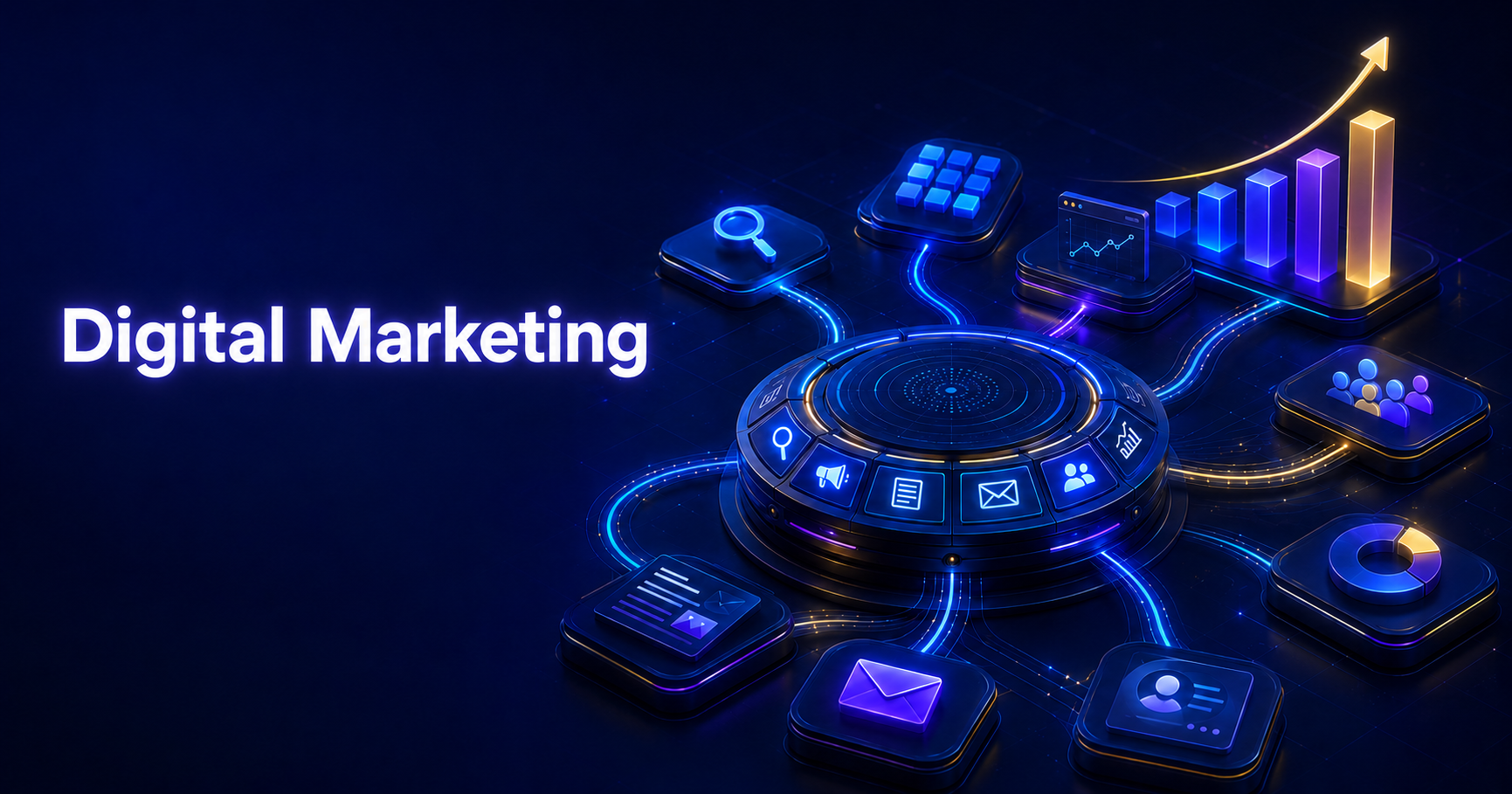
Digital marketing works best when every channel supports a clear business objective rather than operating as a collection of disconnected activities. At Kaizen Digital Hub, we develop structured digital marketing strategies that help businesses improve visibility, reach relevant audiences, communicate their value, and create measurable opportunities across the customer journey.
Our approach can combine search engine optimization, paid advertising, social media, content, creative production, website improvements, and performance analysis according to the needs of the business. We do not recommend every channel by default. Instead, we identify the platforms, messages, and activities most relevant to your audience, goals, available resources, and competitive environment.
Integrated Digital Marketing
Customers may discover a business through search, see an advertisement, visit a social profile, read a service page, and return later before making an enquiry or purchase. These interactions influence one another, which means channel planning should consider the wider customer journey rather than evaluating each platform in isolation.
We connect strategy, content, creative, landing pages, campaign execution, and measurement so the experience remains consistent from the first interaction to the intended conversion. This also helps the business understand which activities are supporting awareness, consideration, lead generation, sales, or customer communication.
Our Digital Marketing Services
Strategy and Planning
A clear strategy determines which audiences to prioritize, which channels to use, what messages to communicate, and how performance should be evaluated. We begin by reviewing your business model, target market, current digital presence, customer journey, competitors, available content, internal resources, and commercial priorities.
The resulting plan defines channel roles, campaign themes, content needs, conversion paths, budgets, responsibilities, and relevant performance indicators. This creates a practical framework for execution and helps prevent resources from being spread across activities that do not support a defined objective.
Search Engine Optimization
Search Engine Optimization helps search engines understand your website and makes it easier for relevant users to discover your pages through organic search. Our SEO work may include technical audits, keyword and search-intent research, on-page optimization, internal linking, content planning, local SEO, and legitimate authority development.
SEO is approached as a long-term improvement process rather than a promise of instant rankings. Priorities are selected according to the condition of the website, business relevance, competition, available resources, and the opportunities most likely to support qualified organic visibility.
Paid Advertising
Paid advertising can help businesses reach selected audiences, promote priority offers, generate enquiries, and test campaign messages more directly. Depending on the strategy, campaigns may use search advertising, display placements, remarketing, social advertising, or other appropriate paid channels.
We plan campaigns around a defined action rather than focusing only on impressions or clicks. Audience selection, keyword targeting, creative direction, budget allocation, landing-page relevance, conversion tracking, and lead quality are considered together when evaluating performance.
Social Media Marketing
Social media allows businesses to build familiarity, communicate with customers, present expertise, and promote important products or services. We develop platform-specific strategies based on audience behavior, brand positioning, communication goals, content resources, and the role each selected platform should play.
Services can include content planning, caption writing, branded graphics, account management, community monitoring, paid social campaigns, and reporting according to the agreed scope. We prioritize consistent, relevant communication instead of publishing low-value content simply to maintain a posting schedule.
Content and Copywriting
Useful content helps potential customers understand a problem, compare options, evaluate expertise, and decide what to do next. We plan and develop content around customer questions, search intent, campaign priorities, service information, product value, and the needs of different stages in the decision-making process.
Content may include service pages, landing pages, articles, campaign messages, social posts, advertising copy, email copy, or supporting resources where relevant. Every asset should have a defined audience, communication purpose, distribution plan, and appropriate next action.
Creative and Campaign Assets
Digital campaigns need visual communication that is clear, consistent, and appropriate for the platform where it will appear. Our creative support can include social media graphics, advertising assets, carousels, banners, landing-page visuals, campaign concepts, and other branded materials defined within the project scope.
Design decisions are guided by the message and intended action rather than decoration alone. Typography, imagery, color, spacing, hierarchy, and calls to action are organized so users can understand the main idea quickly across different screen sizes and placements.
Landing Pages and Conversion
Campaign performance depends on what happens after a user clicks. A relevant advertisement or social post can still produce weak results when the destination page is slow, confusing, inconsistent with the campaign message, or unclear about the next step.
We review landing-page content, message continuity, mobile usability, forms, calls to action, and conversion paths within the agreed scope. When broader design or development changes are required, they can be coordinated with the appropriate website team so marketing and implementation remain aligned.
Analytics and Reporting
Reliable measurement helps distinguish useful marketing activity from surface-level attention. We identify indicators connected to the campaign objective, which may include qualified website visits, enquiries, leads, sales, conversion rate, cost per result, customer acquisition cost, and revenue where the required tracking and business data are available.
Tracking quality depends on website configuration, consent requirements, platform limitations, attribution models, and the accuracy of the available data. Reports explain performance in context, acknowledge relevant limitations, and identify practical next actions instead of presenting every metric as an exact representation of business impact.
Our Marketing Process
1. Business and Marketing Discovery
We begin by understanding your products or services, target customers, locations, sales process, current marketing, competitors, previous campaign experience, and priority business outcomes. This stage also identifies internal resources, approval requirements, available creative assets, technology, and practical constraints that may affect execution.
The objective is to define what digital marketing needs to accomplish and how it connects to the wider business. Without this context, channel recommendations can become disconnected from sales capacity, customer needs, or the actual value of the offer.
2. Digital Presence and Opportunity Review
We assess relevant parts of the existing digital presence, which may include the website, search visibility, social profiles, advertising accounts, content, analytics, conversion paths, and brand consistency. Available performance data is reviewed to establish a baseline and identify gaps that require attention.
We also examine audience behavior, competitor activity, channel opportunities, and potential barriers between discovery and conversion. The findings help separate urgent foundational work from activities that can be introduced in later stages.
3. Channel Strategy and Campaign Plan
Based on the research, we recommend the channels and activities most appropriate for the agreed objectives. The plan defines audience groups, messaging, offers, content themes, campaign structure, landing-page needs, budgets, performance indicators, deliverables, and responsibilities.
Not every channel needs to launch at the same time. A phased plan may be more practical when tracking, website improvements, content production, or account setup must be completed before campaign investment can be evaluated reliably.
4. Content, Creative, and Campaign Setup
Campaign assets are prepared according to the approved strategy and platform requirements. This may include copy, graphics, landing-page recommendations, tracking configuration, audience setup, keyword selection, content calendars, and approval workflows.
Each asset is reviewed for message clarity, brand consistency, technical suitability, and connection to the intended conversion path. Where client approval or access is required, responsibilities and deadlines are defined to reduce avoidable delays.
5. Launch and Ongoing Management
Approved campaigns and content are launched according to the planned schedule. We monitor delivery, audience response, spend, tracking signals, and relevant performance indicators within the agreed management scope.
Management may involve budget adjustments, creative testing, audience refinement, content changes, keyword updates, placement reviews, or landing-page recommendations. Changes are made using available evidence while allowing enough data to accumulate before drawing conclusions where appropriate.
6. Reporting and Continuous Improvement
Performance is reviewed against the original objectives rather than a collection of unrelated metrics. Reports summarize completed work, significant changes, campaign outcomes, identified limitations, and recommended priorities for the next period.
Digital marketing improvement is iterative. Audience behavior, competition, offers, platforms, and business priorities can change, so strategy should be refined using current evidence rather than continuing the same activities without review.
Why Choose Kaizen ?
Strategy Before Channel Activity
We do not begin by assuming that your business needs every available marketing platform. Channel selection and campaign planning are based on audience relevance, business priorities, available resources, conversion readiness, and the role each activity can realistically play.
Connected Marketing Capabilities
Our work can connect SEO, social media, advertising, content, creative design, website improvements, and data analysis when the campaign requires coordinated support. This helps maintain consistent messaging and reduces gaps between marketing recommendations, creative execution, and the customer experience after a click.
Business-Focused Measurement
Reach, impressions, clicks, followers, and rankings can provide useful information, but they do not automatically represent business growth. We evaluate them alongside qualified enquiries, sales activity, cost efficiency, landing-page behavior, and other outcomes that can be measured reliably.
Clear Scope and Communication
Deliverables, responsibilities, approval requirements, access needs, reporting, fees, and advertising budgets are defined before ongoing work begins. You receive clear explanations of what is being implemented, why it matters, what the data indicates, and where uncertainty or tracking limitations exist.
Sustainable Improvement
Digital marketing does not provide guaranteed results, and performance can be influenced by competition, budget, market demand, offer quality, website experience, sales follow-up, and platform changes. We focus on disciplined execution, useful testing, accurate measurement, and continuous improvement rather than unrealistic promises.
Ready to Grow Digitally?
Effective digital marketing brings the right channels, messages, creative assets, website experiences, and measurement systems together around a defined business objective. Kaizen Digital Hub can review your current digital presence and develop a practical plan based on your audience, opportunities, and available resources.
Tell us about your business, target customers, current marketing challenges, and the outcomes you want to achieve. We will review the requirements and outline an appropriate strategy, scope, channel mix, estimated timeline, and reporting approach.